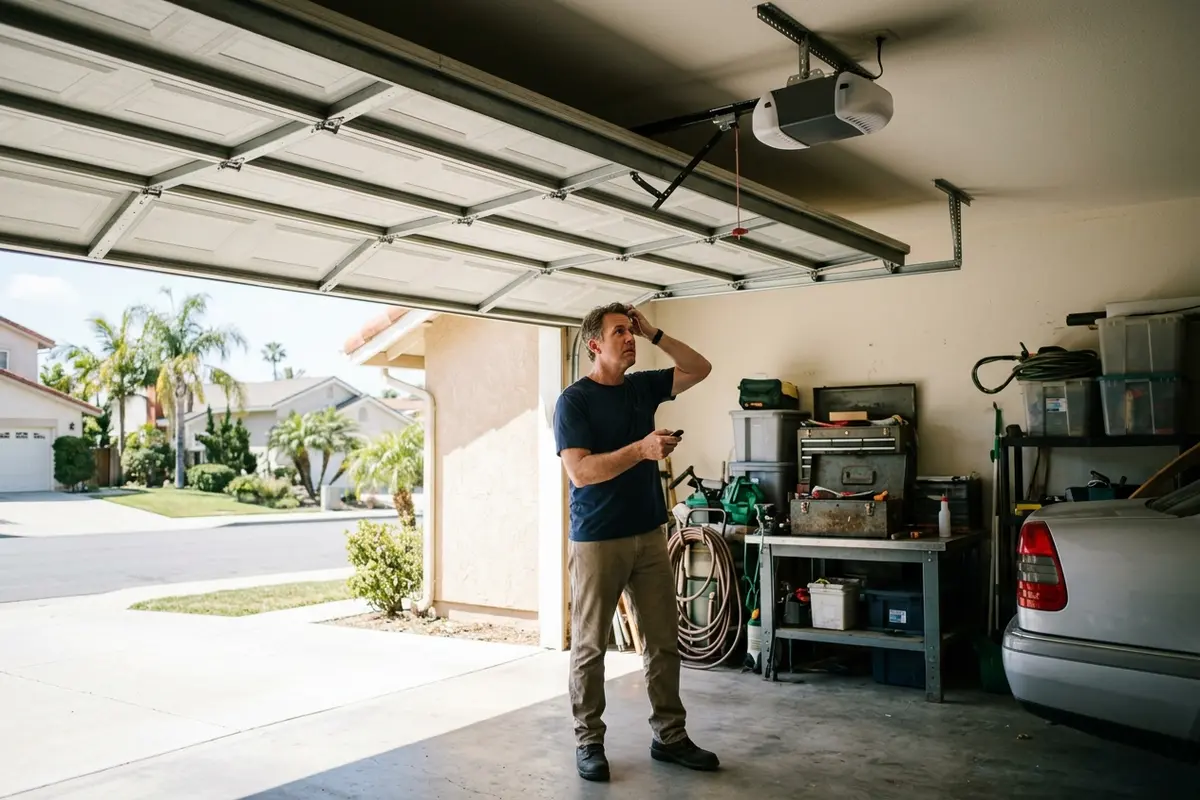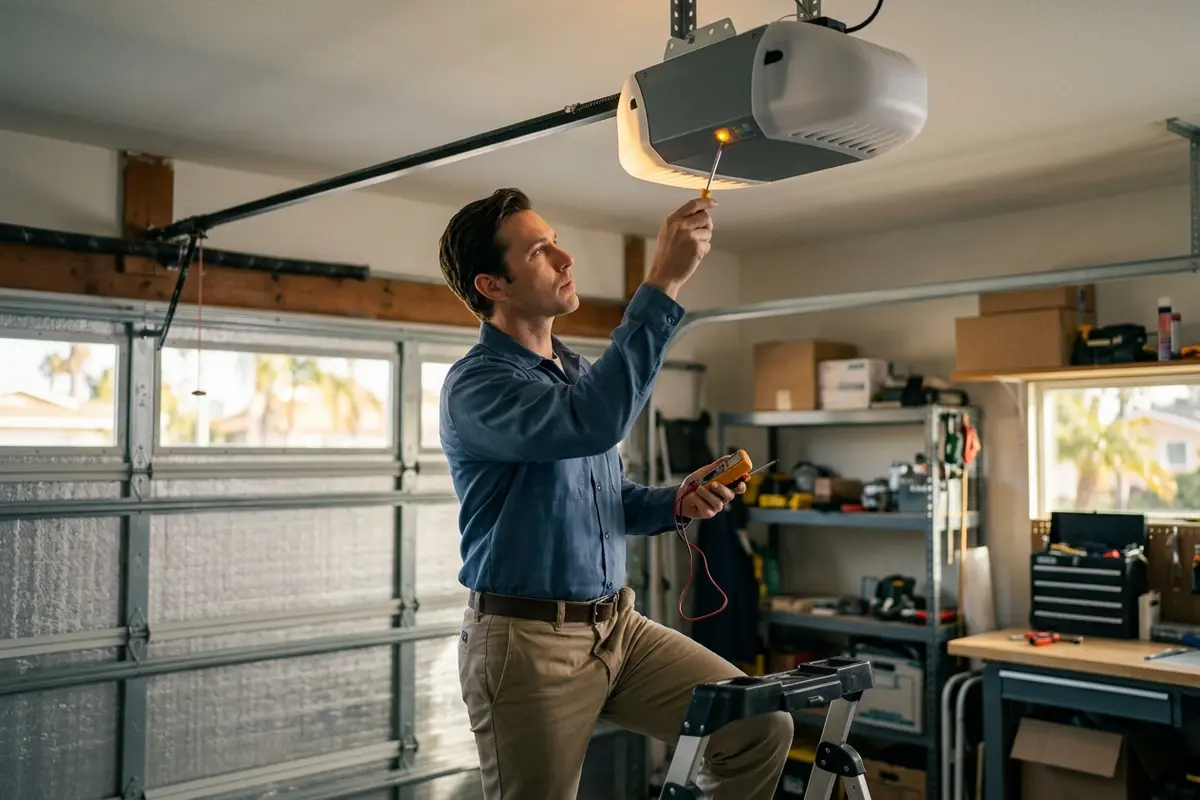
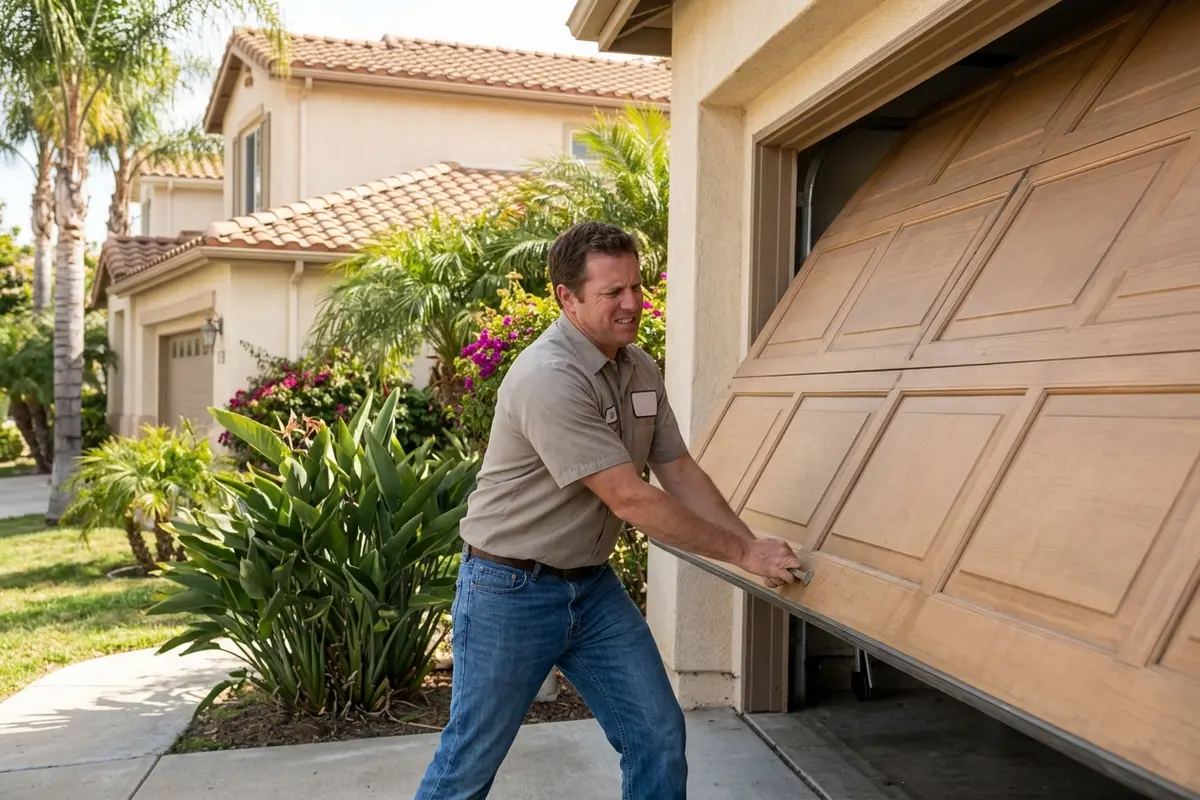
Imagine struggling to lift your garage door every time you leave or return home. A garage door hard to lift by hand is more than an inconvenience. It can indicate a mechanical problem that affects your safety and the overall operation of your garage door. Homeowners throughout San Diego County may experience this issue because of worn springs, damaged cables, rusty hardware, or misaligned tracks. Coastal conditions can also contribute to corrosion on exposed metal components, making regular maintenance particularly important. A properly balanced garage door should move smoothly without requiring excessive physical effort. If yours suddenly feels unusually heavy, identifying the cause early can help prevent additional damage and costly repairs. For professional assistance with these issues, explore our garage door repair services.
Why Is Your Garage Door So Heavy When Lifting It Manually?
Most residential garage doors are surprisingly heavy. Their weight is supported by a spring system that counterbalances the door during opening and closing. Garage door openers provide automated movement, but the springs handle most of the lifting force. When the spring system becomes weak or damaged, the full weight of the door becomes much more noticeable during manual operation.
There are two common types of garage door spring systems:
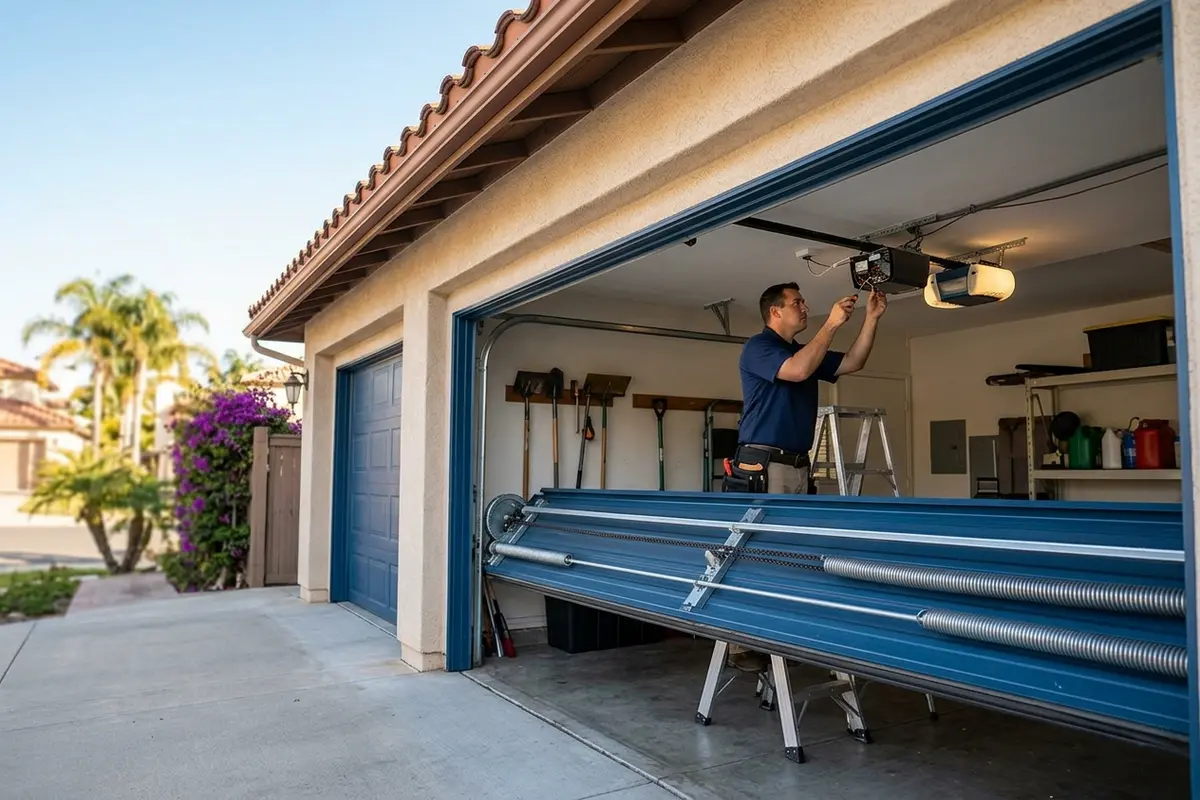
Torsion springs: These springs are mounted above the garage door opening. They use stored rotational energy to help lift and lower the door.
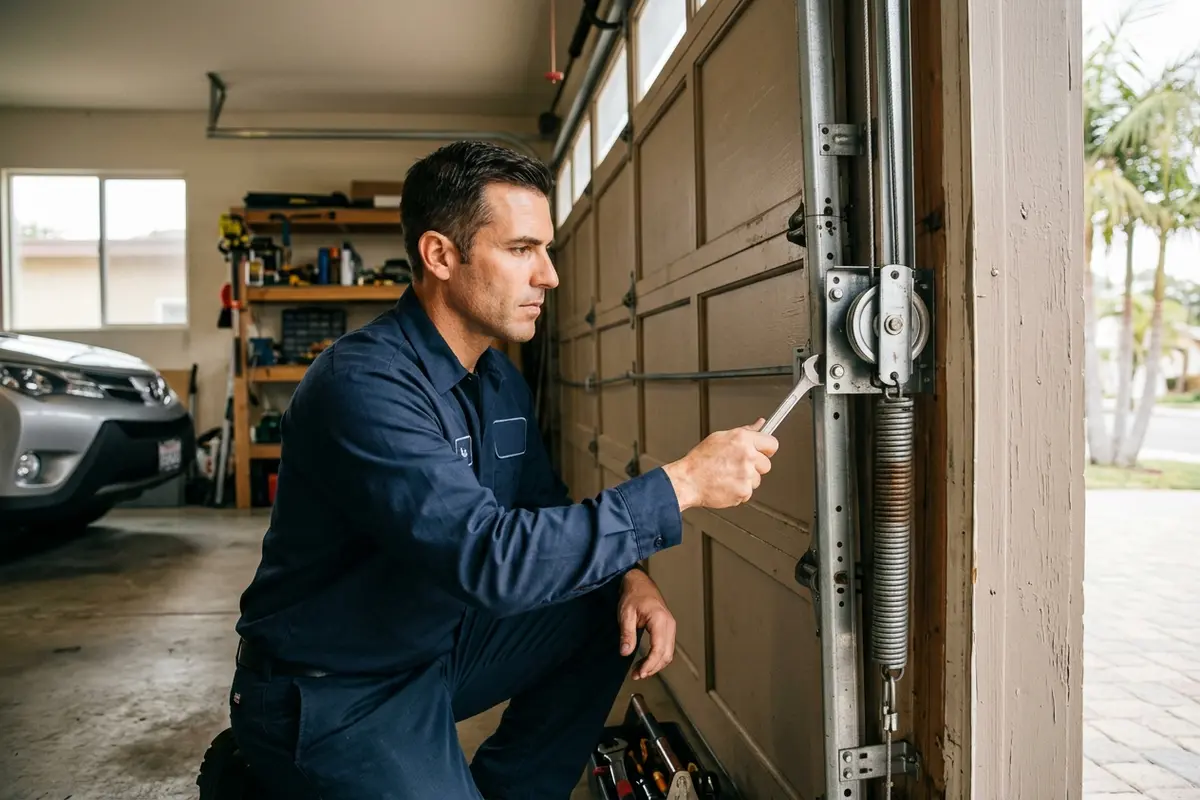
Extension springs: These are installed along the horizontal tracks on either side of the door. They stretch and contract to counterbalance the door’s weight.
Both systems experience wear after repeated opening and closing cycles. When their tension decreases or a spring breaks, the garage door may become difficult or unsafe to lift manually.
Signs Your Garage Door Is Out of Balance
A garage door that suddenly feels heavier than usual may have a balance problem. Recognizing the warning signs can help you determine when professional attention is needed. One noticeable symptom is a door that drops quickly instead of remaining in position. You may also notice uneven movement, loud noises, or difficulty raising the door even a few inches.
In some situations, the door may appear crooked because one side is not receiving the same support as the other. A balance test is sometimes used to evaluate spring performance, but it should only be performed when the door and spring system are known to be safe. If you notice a broken spring, loose cable, or damaged hardware, do not disconnect the opener or attempt to lift the door yourself. These issues may require professional garage door spring repair and replacement to restore safe, balanced operation.
How San Diego’s Coastal Climate Affects Garage Door Hardware
Coastal weather can create additional challenges for garage door systems. Salt particles and moisture in the air may gradually contribute to corrosion on exposed steel components. Homes near La Jolla and other coastal communities may experience increased exposure to these conditions. Rust can weaken metal hardware, affect moving components, and contribute to premature wear. Regular inspections help identify corrosion and other developing problems before they interfere with normal garage door operation.
Common Reasons Your Garage Door Is Difficult to Lift
Several mechanical components work together to support the weight of your garage door. When one of these parts becomes damaged or worn, the entire system may become harder to operate.
1. Broken or Worn Garage Door Springs
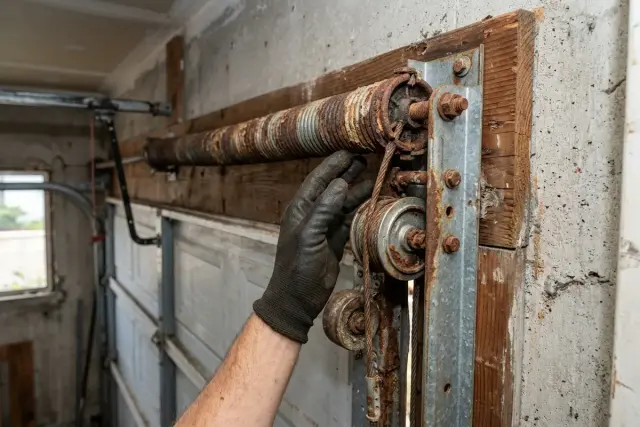
Broken springs are one of the most common reasons a garage door becomes extremely heavy. Garage door springs handle the tension required to counterbalance the door’s weight. However, repeated use gradually causes metal fatigue. Eventually, the springs may lose their effectiveness or break completely. You may notice a visible gap in a torsion spring above the garage door. A loud bang from the garage can also indicate that a spring has snapped.
When a spring breaks, the opener may struggle to lift the door or stop working altogether. Never attempt to stretch, adjust, or replace garage door springs yourself. These components hold significant tension and can cause serious injuries if handled incorrectly. Professional spring replacement restores the proper balance and helps prevent additional strain on the garage door opener.
2. Dry or Worn Garage Door Rollers and Tracks
Rollers allow your garage door to travel smoothly along its tracks. When they become worn, dirty, or poorly lubricated, friction can make the door difficult to move. Steel rollers may also develop rust when exposed to moisture. Over time, damaged rollers can create grinding noises and interfere with normal door movement.
Dirt, debris, and hardened lubricant inside the tracks can contribute to similar problems. Nylon rollers are another option for homeowners looking for quieter garage door operation. A technician can inspect the existing rollers and determine whether cleaning, lubrication, or replacement is appropriate.
3. Frayed or Damaged Garage Door Cables
Garage door cables work alongside the spring system to support controlled movement. These heavy-duty steel cables connect the door’s lower brackets to the cable drums. Over time, moisture, corrosion, and repeated use can weaken individual cable strands. Frayed cables may eventually snap, leaving the garage door uneven or completely inoperable.
You might notice that one side of the door hangs lower than the other. In some cases, the door may become stuck or move unevenly along the tracks. Damaged cables should never be handled or replaced without proper training. Because they work under significant tension, professional repair is the safest way to restore normal operation.
4. Bent or Misaligned Garage Door Tracks
Garage door tracks guide the rollers as the door moves between open and closed positions. If these tracks become bent or misaligned, the rollers may experience additional friction. Even a minor impact from a vehicle can affect track alignment. Loose mounting brackets or gradual structural movement can also contribute to the problem. Common warning signs include scraping sounds, uneven movement, and rollers that struggle to travel through certain sections. A professional technician can inspect the tracks, mounting hardware, and roller alignment to determine whether adjustments or replacement are necessary.
5. Damaged Hinges and Loose Hardware
Garage door hinges connect individual door sections and allow the panels to bend as they travel along the tracks. Daily operation creates repeated movement and vibration throughout the hardware. Over time, hinges, brackets, and fasteners may become worn or loose.
When these components stop working correctly, the door may move unevenly or produce unusual noises. A professional inspection can identify damaged hardware and determine which components need tightening, lubrication, or replacement.
Why You Should Avoid DIY Garage Door Spring Repairs
When a garage door becomes difficult to lift, replacing the springs yourself might seem like a simple way to save money. However, garage door spring repairs involve significant safety risks. Torsion and extension springs store substantial mechanical energy. If a spring or winding component slips during repair, it can cause serious injuries or damage nearby property. Using ordinary household tools instead of specialized equipment increases these risks.
Attempting to operate a garage door with a broken spring can also damage the opener, cables, and other connected components. Professional technicians have the training and equipment required to inspect spring systems, replace damaged components, and restore proper door balance. If your garage door feels unusually heavy, avoid forcing it open or closed. Arrange professional garage door repair services to identify the problem safely.
Professional Garage Door Spring Replacement in San Diego
Finding the actual cause of a heavy garage door requires more than checking the springs. The entire operating system should be evaluated to ensure that every component works together properly. At Apex Garage Doors & Gates, professional garage door service helps homeowners address problems involving springs, cables, rollers, tracks, and opener systems. A proper inspection can identify worn components, incorrect spring tension, and other mechanical issues affecting door movement.
Replacing damaged springs with compatible components helps restore the counterbalance needed for smooth operation. Technicians can also inspect related hardware to identify problems that might cause another breakdown. Whether you live in San Diego, La Jolla, Chula Vista, or surrounding communities, timely garage door service can help keep your system operating reliably. For additional assistance with opener-related problems, explore our garage door opener repair and installation services.
How San Diego Weather Can Affect Your Garage Door
Weather conditions can gradually affect the performance and lifespan of garage door components.
Salt Air and Moisture Exposure
Coastal air contains salt and moisture that can contribute to corrosion on exposed metal surfaces. Springs, cables, brackets, and other steel components may experience accelerated deterioration when they are not properly maintained. Regular inspections can help identify rust before it causes more serious mechanical problems.
Temperature Changes and Metal Fatigue
Metal components naturally expand and contract as temperatures change. Repeated temperature fluctuations can contribute to wear over time, particularly when parts are already weakened. Garage door springs experience constant tension during normal operation. Combined with repeated opening and closing cycles, this can eventually lead to metal fatigue.
Humidity and Lubrication Problems
Moisture can contribute to rust and affect moving hardware. Rollers, hinges, and other components may experience increased friction when lubrication is insufficient or unsuitable. Using manufacturer-recommended garage door lubricant helps protect compatible moving parts and supports smoother operation.
How to Keep Your Garage Door Easy to Lift
Preventative maintenance plays an important role in keeping garage door systems operating smoothly. Although it cannot prevent every mechanical failure, regular inspections can identify developing problems before they become more serious. Pay attention to unusual noises, uneven movement, visible rust, and changes in how your garage door operates. Keep the track area free of dirt and debris, and use an appropriate garage door lubricant on compatible moving components. Avoid applying grease to the tracks because it can attract dirt and interfere with roller movement.
You should also check the condition of visible hardware without touching springs or cables. If you notice fraying, gaps in a spring, or loose components, stop using the door and contact a professional. Regular professional servicing helps ensure that the springs, rollers, cables, tracks, and safety features remain in proper working condition. For more maintenance guidance, read our article on how often garage doors should be serviced.
When Should You Call a Garage Door Repair Technician?
Not every garage door problem requires immediate replacement. However, a door that becomes noticeably heavier should never be ignored. Professional service is recommended if you notice a broken spring, frayed cable, bent track, uneven movement, or unusual resistance when operating the door.
You should also stop using the automatic opener if it struggles to lift the door. Continuing to operate an unbalanced system can put unnecessary strain on the motor and drive mechanism. A qualified technician can inspect the entire assembly, identify the underlying problem, and recommend the appropriate repair. Early attention can help prevent further component damage and reduce the risk of an unexpected garage door failure.
Restore Smooth Garage Door Operation With Apex Garage Doors & Gates
A garage door that is hard to lift by hand often indicates a problem with its spring system, cables, rollers, or tracks. Ignoring these warning signs can lead to additional damage and potentially dangerous operating conditions. Apex Garage Doors & Gates provides professional garage door repair and maintenance services throughout San Diego, CA. Whether you are dealing with a broken spring, damaged cable, or an unbalanced garage door, our team can help identify the problem and recommend a suitable solution. Do not risk your safety by forcing a heavy garage door open or attempting complicated spring repairs yourself. Explore our complete range of garage door services or contact Apex Garage Doors & Gates to request professional assistance.
Frequently Asked Questions
1. Why is my garage door so hard to lift manually?
A garage door may become difficult to lift because of broken or weakened springs, damaged cables, worn rollers, or misaligned tracks. The spring system normally counterbalances the door’s weight, so problems with spring tension can make the door feel extremely heavy.
2. Can I open my garage door manually if the spring is broken?
It is not recommended. A garage door with a broken spring can be extremely heavy and may fall unexpectedly. Avoid disconnecting the opener or attempting to lift the door. Contact a professional technician for assistance.
3. How do I know if my garage door spring is broken?
Common signs include a visible gap in the torsion spring, a loud banging noise, a crooked door, or an opener that struggles to lift the door. If you notice these symptoms, stop operating the system and arrange professional inspection.
4. How long do garage door springs usually last?
Spring lifespan depends on the spring type, quality, maintenance, and frequency of use. Standard springs are commonly rated for approximately 10,000 opening and closing cycles. Higher-cycle springs are also available for systems that experience frequent use.
5. How much does it cost to fix a heavy garage door in San Diego?
The cost depends on the underlying problem, garage door size, spring type, and replacement parts required. Spring replacement, cable repairs, and track adjustments may have different costs. A professional inspection is the best way to receive an accurate estimate.